




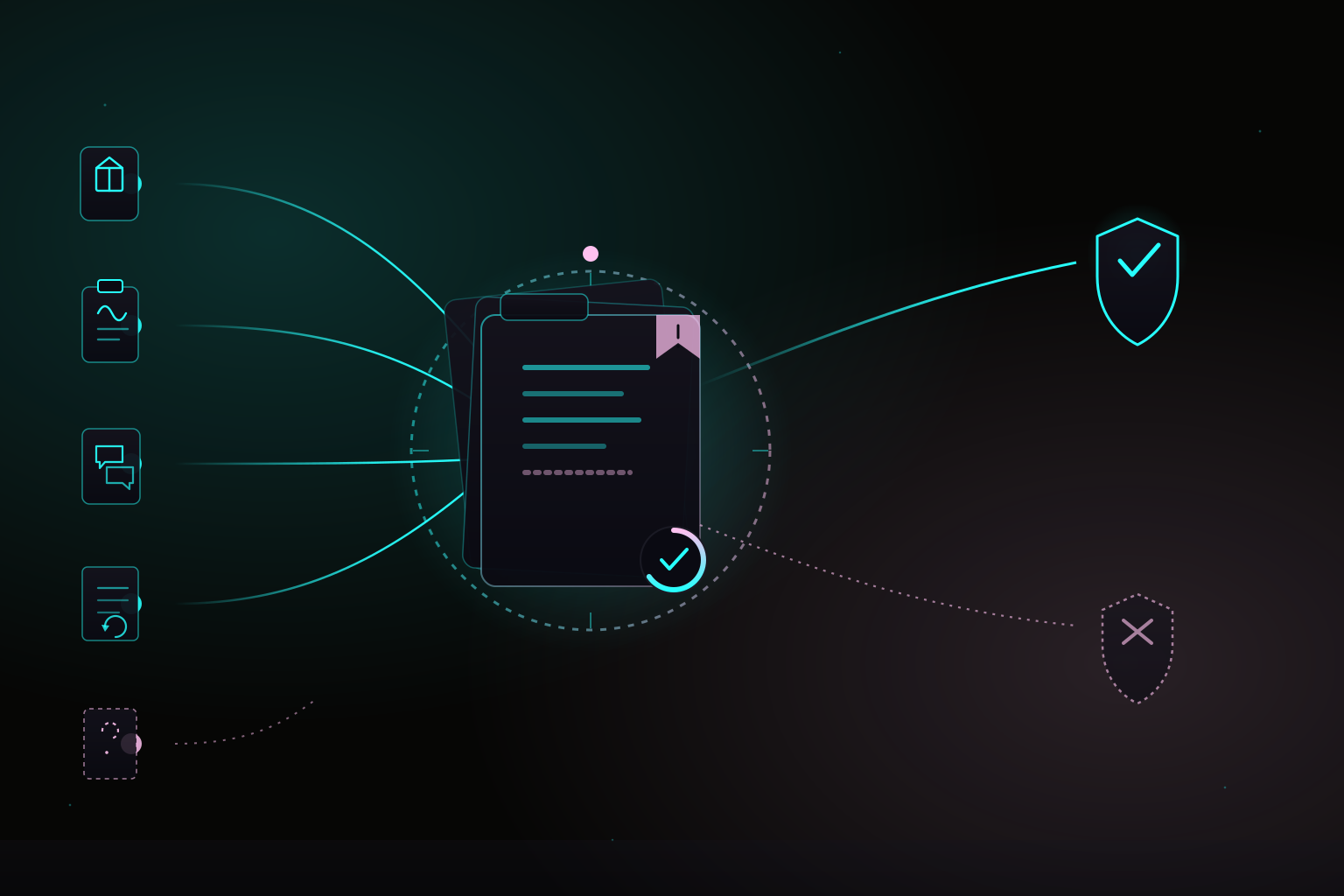
Chargebacks are not only a finance problem anymore. Every dispute a payment or marketplace team fights is a race against a hard deadline, and the outcome depends on whether the right proof was captured, organized, and submitted before the window closes.
Recent Stripe research into roughly a million dispute-evidence submissions makes the pattern obvious: a large share of disputes are lost not because the merchant did anything wrong, but because the evidence that would have proven it existed somewhere — in a shipping system, a support thread, an inbox — and never made it into the case in time.
That is a UX problem before it is a finance problem. Payment operations teams do not need another spreadsheet or a shared inbox. They need an evidence workbench.
Why Dispute Evidence Is a UX Problem
Winning a dispute depends on assembling proof — fulfillment timeline, delivery confirmation, customer communication, refund and return history — into one coherent, submittable package before a deadline that is often measured in days, not weeks.
The proof usually already exists. It just lives in three or four different systems, owned by three or four different teams, none of which was designed with a dispute deadline in mind. Support holds the conversation history. Fulfillment holds the shipping and delivery data. Finance holds the payment and refund record. Nobody owns the case as a whole until it is already late.
Distributed proof plus a hard deadline plus no single owner interface is exactly the combination that produces preventable losses.
The Old Pattern: Scrambling Before the Deadline
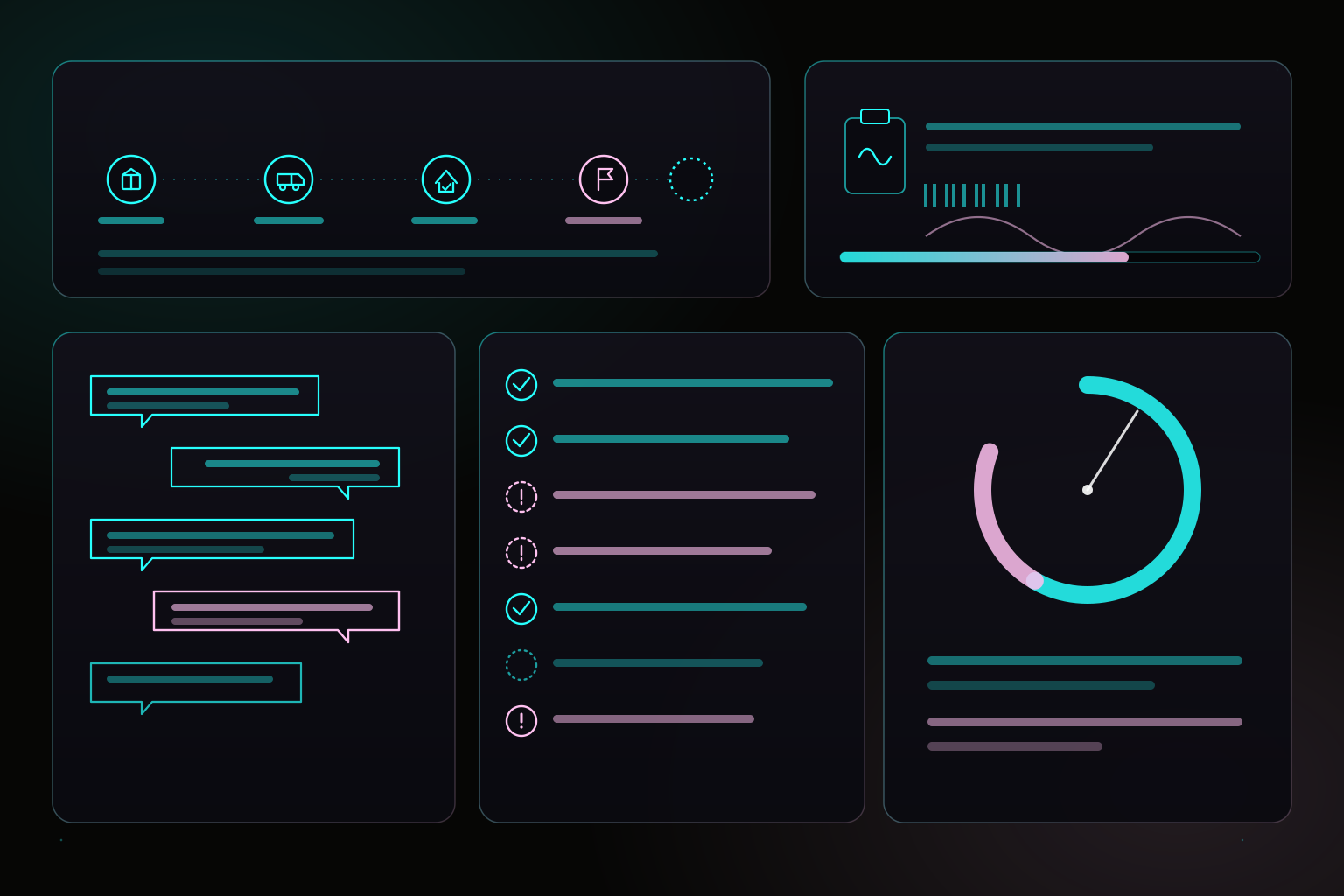
In most payment stacks, a dispute notification lands as a line item in a processor dashboard or an email alert. From there, an operations person manually hunts through the order system, the shipping carrier's site, old support tickets, and CRM notes to piece together something submittable — usually with a day or two of runway left.
- Nobody can see what evidence has already been collected until submission day.
- Support and fulfillment systems live outside the dispute tool, so proof gets copy-pasted at the last minute.
- Deadlines are tracked in spreadsheets or calendar reminders, not inside the workflow itself.
- There is no missing-evidence warning until the case is already late to fix.
- A rejected dispute rarely produces a clear, reusable lesson for the next one.
For the customer, the product experience is invisible. For the operations team, it is a recurring fire drill. And for the business, it is quietly leaking revenue on cases that were winnable with evidence that existed the whole time.
What a Dispute Evidence Workbench Should Show
A strong dispute evidence interface should answer six practical questions.
1. Fulfillment timeline
Order, fulfillment, shipping, and delivery events pulled automatically into one chronological view, so the case does not depend on someone remembering which system has the tracking number.
2. Delivery and service proof
Signed delivery confirmations, carrier tracking, access logs, or usage evidence for digital goods and services — attached to the case automatically, not hunted down manually per dispute.
3. Customer communication thread
Support tickets, refund offers, and resolution attempts, with timestamps, pulled into the same case so the reviewer sees the full relationship, not a single isolated message.
4. Missing-evidence warnings
The workbench should flag gaps early — no delivery confirmation, no communication log, no refund record — while there is still time to fill them, not on the day the case is due.
5. Deadline-aware states
Clear countdown visibility, automatic escalation as the deadline approaches, and unambiguous ownership so a case never quietly expires because it sat in the wrong queue.
6. Final submission gate
A completeness checklist and, for high-value disputes, a second set of eyes before the package is submitted — the same discipline a release-readiness gate applies to shipping code.
Design the Evidence States, Not Just a Form
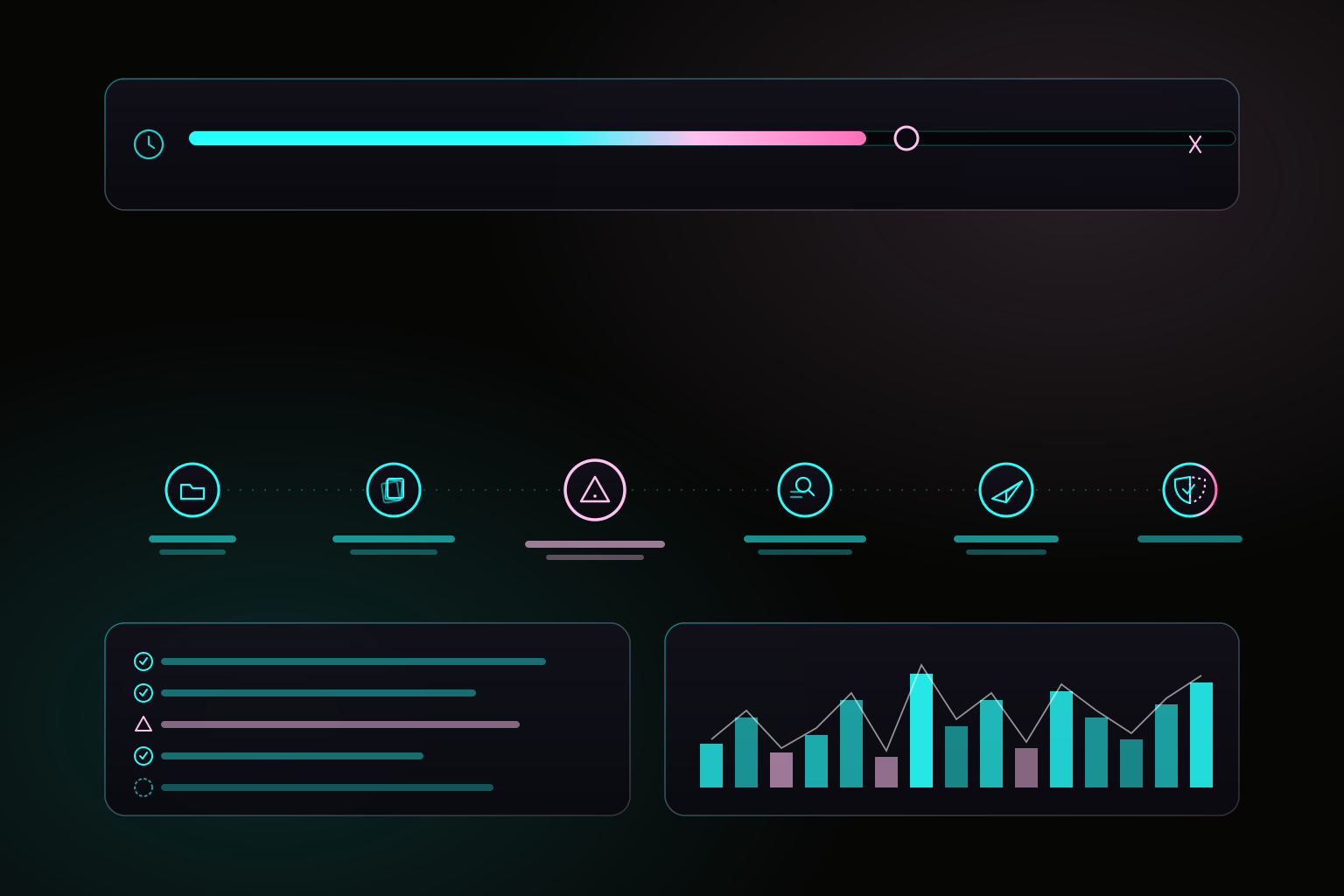
The common mistake is treating dispute evidence as one upload form. In practice, it is a state machine, and the interface should make every state visible.
- Dispute opened: the deadline clock starts and a case is created automatically from the processor's dispute event.
- Evidence assembling: connected systems — fulfillment, support, CRM, billing — contribute artifacts automatically.
- Gap flagged: the workbench highlights missing proof types with days-remaining context, not just a red badge.
- Ready for review: the evidence package is complete and routed for an internal sign-off before submission.
- Submitted: the package is sent to the processor, with confirmation and timestamp logged on the case.
- Resolved: the win or loss outcome is recorded with a reason, feeding a pattern library the team can learn from.
This is where the interface directly affects the outcome, not just the experience. A clean evidence state tells the operator what is happening, why it matters, and exactly what to do next — before the clock runs out.
The Business Case for a Dispute Evidence Workbench
Scrambled dispute handling creates three problems for payment, marketplace, and fintech products.
- Preventable losses: winnable disputes are lost because evidence existed but was not assembled in time.
- Operations burnout: the same manual scramble repeats every time, across every team member who touches disputes.
- No institutional memory: the same evidence gaps recur because nothing captures what was missing last time.
A visible evidence workbench reverses all three. Teams stop losing winnable cases to missing paperwork, operations work becomes a checklist instead of a fire drill, and every resolved case makes the next one faster.
Heeeper’s Take
Dispute evidence should not feel like a scavenger hunt against a countdown timer. It should feel like a case-management surface built for the deadline it actually has to meet.
The best payment and marketplace products will pull proof from every connected system automatically, flag what is missing while there is still time, and give operators a clear, deadline-aware path from open case to submitted evidence. That is not only a better recovery rate. It is better product UX.
If your product handles payment disputes, chargebacks, or evidence-heavy risk workflows, Heeeper can help design the dashboards and states around it. Explore the Heeeper portfolio or book a product UX consultation.